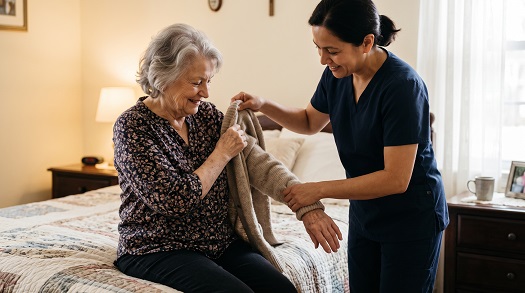
Encouraging independence in dementia patients means simplifying daily tasks, creating consistent routines, and adapting the environment to support their abilities—helping them maintain dignity and confidence as the condition progresses.
Why Does Independence Matter for Dementia Patients?
Maintaining independence supports emotional wellbeing and cognitive function in people living with dementia.
- Completing tasks independently boosts self-esteem and reduces feelings of helplessness.
- Preserved autonomy is linked to lower rates of depression and anxiety in dementia patients.
- Engaging in familiar routines stimulates memory and boosts cognitive health.
How Can Caregivers Simplify Daily Tasks Effectively?
Breaking tasks into smaller, manageable steps makes it easier for dementia patients to participate without becoming overwhelmed.
- Use simple one-step instructions rather than multipart directions.
- Demonstrate the action first, then give your loved one time to follow along.
- Focus on one task at a time and avoid rushing.
- Offer gentle prompts if your loved one gets stuck rather than stepping in immediately.
Caring for a loved one with dementia can be challenging, but compassionate help is available. If your senior loved one has been diagnosed with a serious condition and needs help with tasks like meal prep, transportation, medication reminders, bathing, and grooming, reach out to Align Home Care Services, a leading provider of in-home care Portland families can trust. We also offer comprehensive care for seniors with dementia, Alzheimer’s, and Parkinson’s.
What Environmental Changes Support Greater Independence?
A well-organized familiar environment reduces confusion and makes self-care tasks more achievable.
- Label drawers, cupboards, and doors with words or pictures.
- Remove clutter to reduce distractions and minimize fall risks.
- Use contrasting colors for items like plates and cups to increase visibility.
- Keep frequently used items in the same easy-to-reach locations every day.
A trained caregiver with knowledge about caring for seniors with dementia can be a fantastic resource for family members. Certain age-related conditions can make it more challenging for seniors to age in place safely and comfortably, but Portland 24-hour home care experts are available around the clock to help seniors manage their health. Whether your loved one is living with dementia or recovering from a stroke, you can trust the professional caregivers from Align Home Care Services to enhance his or her quality of life.
How Do Consistent Routines Help Dementia Patients Stay Independent?
Routine provides predictability, which reduces anxiety and makes task completion easier for dementia patients.
- Schedule daily activities such as dressing, meals, and bathing at the same time each day.
- Follow the same sequence of steps for recurring tasks so they become second nature.
- Align routines with your loved one’s natural energy levels (e.g., scheduling complex tasks in the morning when he or she is most alert).
What Adaptive Tools and Techniques Can Make Tasks Easier?
Purpose-designed tools remove barriers and allow dementia patients to complete tasks with less frustration.
- Use adaptive clothing with Velcro fastenings instead of buttons or zippers.
- Opt for utensils with larger, easy-grip handles for mealtimes.
- Install grab bars and nonslip mats in bathrooms to support safe independence.
- Use visual schedules or picture-based checklists to guide your loved one through tasks step by step.
Aging in place can present a few challenges for seniors living with dementia. However, they can still live independently at home with the help of professional Portland dementia home care. Families can rely on Align Home Care Services to provide their elderly loved ones with mental and social stimulation, timely medication reminders, assistance with meal prep, and much more. Our caregivers are available around the clock to help your loved one live a happier and healthier life. Align Home Care Services can be your trusted partner in caregiving for your aging loved one. Contact one of our experienced Care Managers today to learn more about our reliable in-home care services.
Frequently Asked Questions
At what stage of dementia should caregivers start encouraging independence?
+
Independence should be encouraged from the earliest stages of dementia. Starting early establishes routines and adaptive habits before cognitive decline progresses significantly.
How do I know when a task is too difficult for my loved one to do independently?
+
Watch for signs of frustration, repeated errors, or distress during a task. If these occur consistently, it may be time to simplify the task further or offer more guided assistance.
Is it safe to leave dementia patients to complete tasks on their own?
+
Safety depends on your loved one’s stage of dementia and the nature of the task. Low-risk activities like folding laundry or setting a table can often be done with minimal supervision, while tasks involving heat or sharp objects require closer oversight.
How can I encourage independence without making my loved one feel patronized?
+
Use a calm, respectful tone and frame assistance as collaboration rather than correction. Offering choices such as “Would you like to wear the blue or green shirt today?” can preserve your loved one’s sense of control.
What should I do if a dementia patient refuses to complete a task independently?
+
Refusal is often linked to fear of failure or frustration. Try reintroducing the task at a different time of day, simplifying it further, or doing part of it together to rebuild his or her confidence.